Shanghai’s old-meets-new planning tension
The first real planning snag in Shanghai isn’t finding things to do—it’s realizing the “must-sees” don’t naturally sit in one tidy loop. The Bund and Lujiazui are visually paired, but they’re best at opposite times (clear morning detail versus dusk glow), and that alone can split a day if you’re trying to also “just wander” historic lanes without rushing.
Old streets reward slow feet: the French Concession and lane neighborhoods feel wrong when you’re checking the clock every ten minutes. Meanwhile, skyline icons punish bad timing with queues, security lines, and heavy weekend crowding. The workable approach is deciding what you’re optimizing first—light, atmosphere, or efficiency—then letting one priority win per day instead of forcing heritage walks and big viewpoints into the same peak window.
Historic street zones worth prioritizing
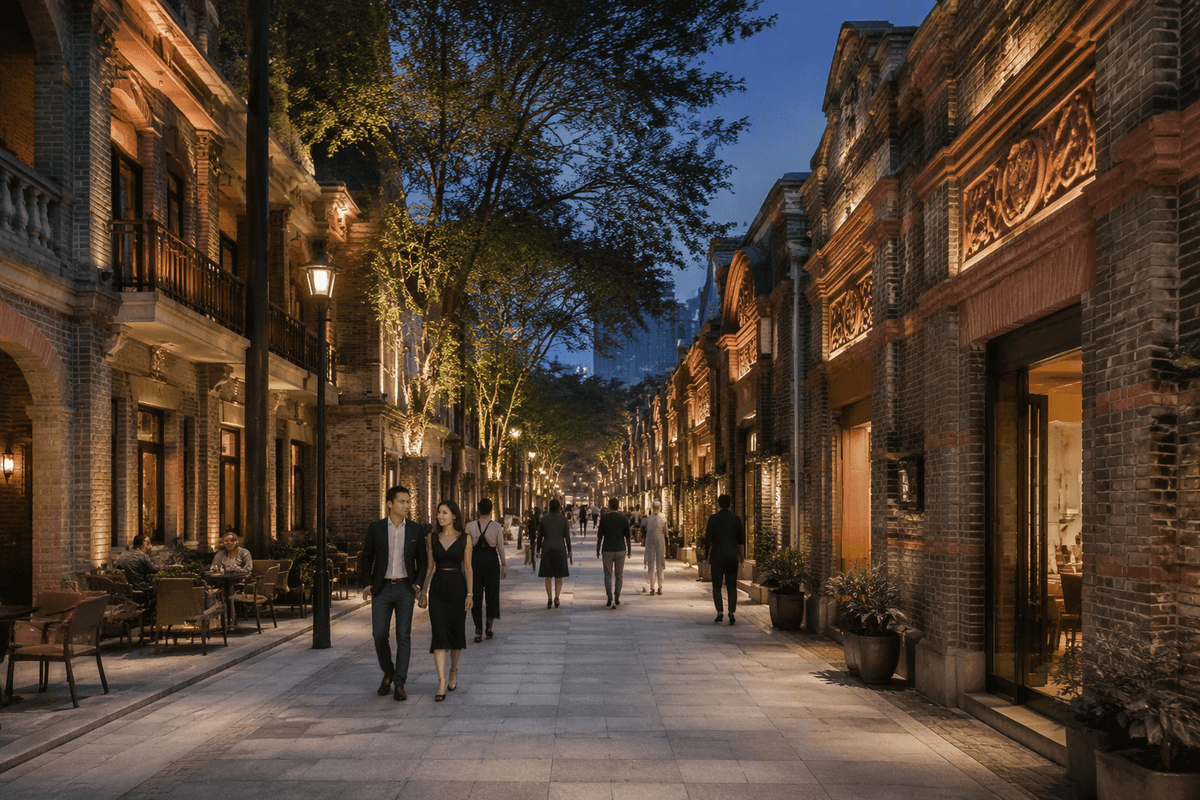
I kept underestimating how much “historic Shanghai” is really a handful of distinct walking experiences—and how quickly they blur if you try to sample all of them in one afternoon. The French Concession is the easiest win for first-timers because it’s flexible: tree-lined blocks, cafés, and smaller lane pockets that still feel good even if you arrive between meals or after a museum run. It’s big enough to turn into accidental mileage, so it helps to pick one anchor (a park edge or a cluster of lanes) and let the rest be drift, not conquest.
For a more curated old-lane hit, the Xintiandi area is polished, readable, and convenient—especially when you’re tired and want “heritage texture” without navigation stress. But it can feel more like an outdoor lifestyle complex than a living neighborhood, and the pricing matches. If you want something closer to street-level grit and local rhythm, parts of the old city around Yu Garden deliver that density—snacks, corners, and crowds—but the limitation is exactly that: it’s busy, it bottlenecks, and it’s rarely the place for a calm stroll. If time or patience is short, prioritize one lane-style zone (French Concession or Xintiandi) and treat the old city as a targeted, earlier-in-the-day stop.
Modern skyline landmarks to pair nearby
The first time I tried to “do the skyline,” I treated Lujiazui like a single checkbox—until I hit the riverfront and realized the real choice is which viewpoint you actually want, and when. The Bund is the simplest, no-ticket baseline: you get the postcard angle across to the towers, and it works even if you only have 30 minutes. The downside is that sunset turns it into a slow-moving crowd, so if you’re sensitive to jostling, aim for late morning or after dinner when the tour groups thin out.
On the Pudong side, Lujiazui rewards clustering: pick one paid height (Shanghai Tower is the usual splurge) and then keep the rest at ground level—river promenade, the plaza lighting, and a short loop between the supertalls. It’s efficient, but not “quick”: security lines and elevator batching can easily eat an hour before you’re even looking out. If you’re debating effort, the trade-off is clear—Bund for frictionless views, Lujiazui for immersion and scale—then use the river crossing as your natural reset instead of forcing another big neighborhood afterward.
Simple routes linking streets to towers
The friction point is the river: it looks like a simple cross on the map, but the “easy” move depends on what you’re trying to protect—your feet, your timing, or your patience for lines. When I wanted skyline without committing to a full tower queue, I treated the Bund as the fixed point and used the crossing as a pivot: French Concession lanes in the late morning, a metro hop to East Nanjing Road, then Bund promenade for a clean daylight look. It works because you’re not fighting for sunset space yet, but it doesn’t work if you’re hoping for a calm, romantic Bund—by late afternoon the crowd density changes the experience.
If you do want the full modern hit, flip it: start in the old city/Yu Garden earlier (before the bottlenecks thicken), then commit to Lujiazui as the “single big thing” later. The practical route is Yu Garden area to a metro line that drops you into Lujiazui, then a short ground loop before choosing one tower. This route is transit-efficient but energy-expensive: old-city crowds plus tower security lines can stack fatigue fast, so build in a riverfront decompression walk rather than trying to tack on another historic neighborhood afterward.
Timing, tickets, and crowd-smart logistics
I learned fast that the “plan” in Shanghai is mostly a timing plan. The Bund is easiest when you’re not competing for the same railing: late morning gives you clean detail and enough breathing room to keep walking without getting funneled. Sunset looks great, but it’s the worst moment for moving efficiently—if you arrive right at golden hour, you’ll spend more time negotiating people than actually seeing the skyline.
For paid viewpoints in Lujiazui, the trade-off is simple: one tower is doable; stacking two is where the day starts leaking. Security checks and elevator batching create a hidden queue even when the ticket line looks short, and it’s hard to predict how long you’ll stand indoors before you’re upstairs. If you’re trying to protect your evening, book the tower earlier and treat the riverfront loop as your flexible buffer—something that still “counts” if lines run long, or something you can cut if your feet are done.
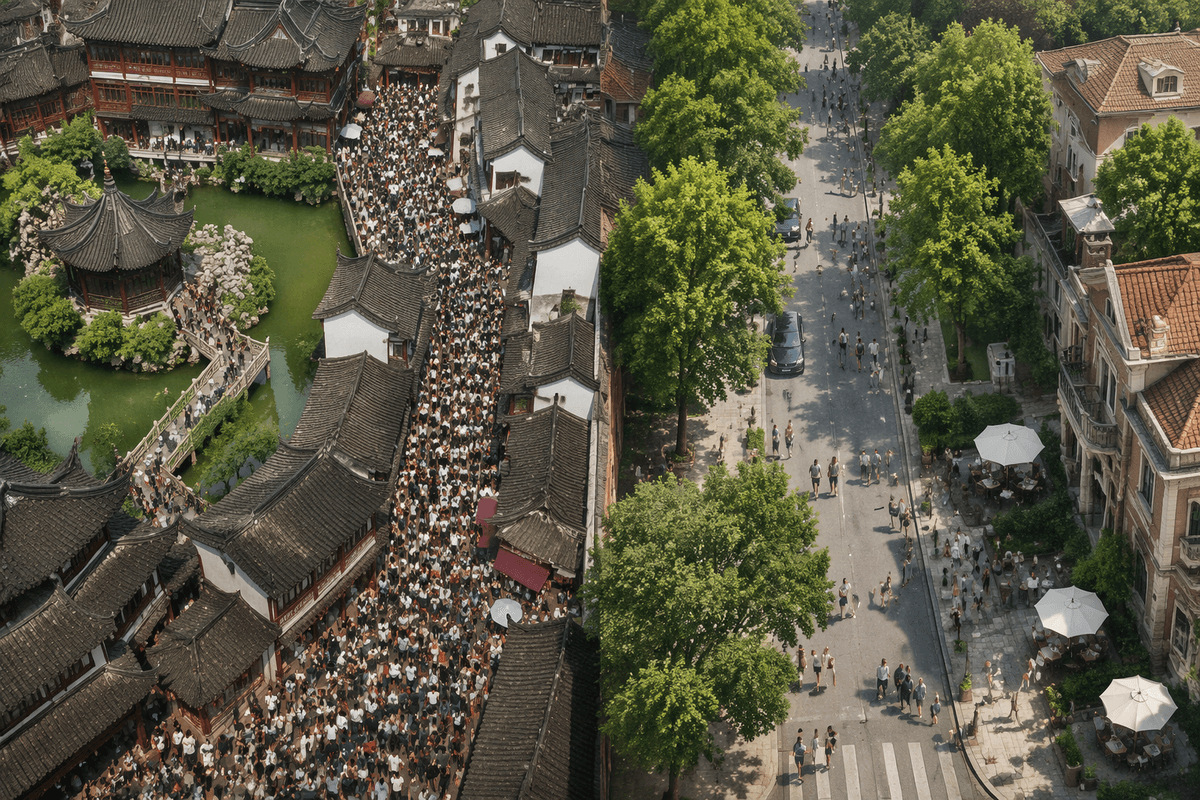
Old areas punish late starts in a different way: Yu Garden and the old-city lanes clog up by midday, and the narrow paths make the crowd feel twice as dense. If you can only do it once, go early, eat something quick, then leave before your patience runs out—save your slower, meandering time for the French Concession, which stays pleasant even when the clock slips.
Putting it together without overpacking days
The easiest way to stop Shanghai from turning into a checklist is to give each day one “hard” commitment and let everything else stay soft. If you book a tower in Lujiazui, don’t also promise yourself a long heritage wander—pair it with something that survives delays, like the river promenade or a short Bund look after dinner. If you start with Yu Garden, treat it like a morning sprint: arrive early, eat, get out, and save your slower hours for the French Concession later.
On a 3–5 day trip, I’d rather repeat a good transit corridor than stitch together distant neighborhoods just to say I did. Plan for one river-crossing day, one lanes-and-cafés day, and keep one flexible slot for weather or fatigue. When energy dips, skip the second “icon”—you’ll remember the pace you kept more than the extra viewpoint.