Why Peanut Butter Can Feel Surprisingly Filling
By late morning, a piece of toast with peanut butter can feel more substantial than its size suggests. The difference is not only the spread itself, but the way its protein, fat, and small amount of fiber slow the meal down. These components may make the stomach feel settled for longer than a snack built mostly from quickly digested carbohydrates, such as plain crackers or a sweet drink.
That sense of staying power can be useful when hunger tends to return soon after breakfast. Still, “filling” does not always mean the same thing as “lasting.” A thin layer on toast may offer a modest effect, while several spoonfuls can add considerable energy without extending satisfaction in proportion. The bread, fruit, yogurt, or other foods eaten alongside it also shape what happens next. Someone may feel comfortably full at first, then snack again an hour later because the overall meal was small, rushed, or lacking volume. The more telling pattern is not the immediate heaviness, but how long comfortable hunger stays away.
The Portion Effect Changes the Experience
A second spoonful can make the difference between a light coating and a noticeably richer snack. It may also change the experience more than expected: the food feels heavier, but the added fullness is not always proportional to the extra calories. This is one reason peanut butter can seem helpful in one routine and excessive in another. A small amount mixed into oatmeal or spread over toast may round out a meal, while a larger portion eaten by itself can become easy to underestimate.
Portion size is also tied to what surrounds it. Peanut butter with whole-grain toast and fruit may provide more volume and a slower eating pace than peanut butter eaten from a spoon between tasks. In the second situation, the immediate hunger may settle, yet the snack can leave little physical volume and may not prevent another eating occasion later. Measuring a portion occasionally—not as a permanent rule, but as a reality check—can reveal whether the amount being used matches the level of fullness it seems to provide.
How Protein, Fat, And Fiber Work Together
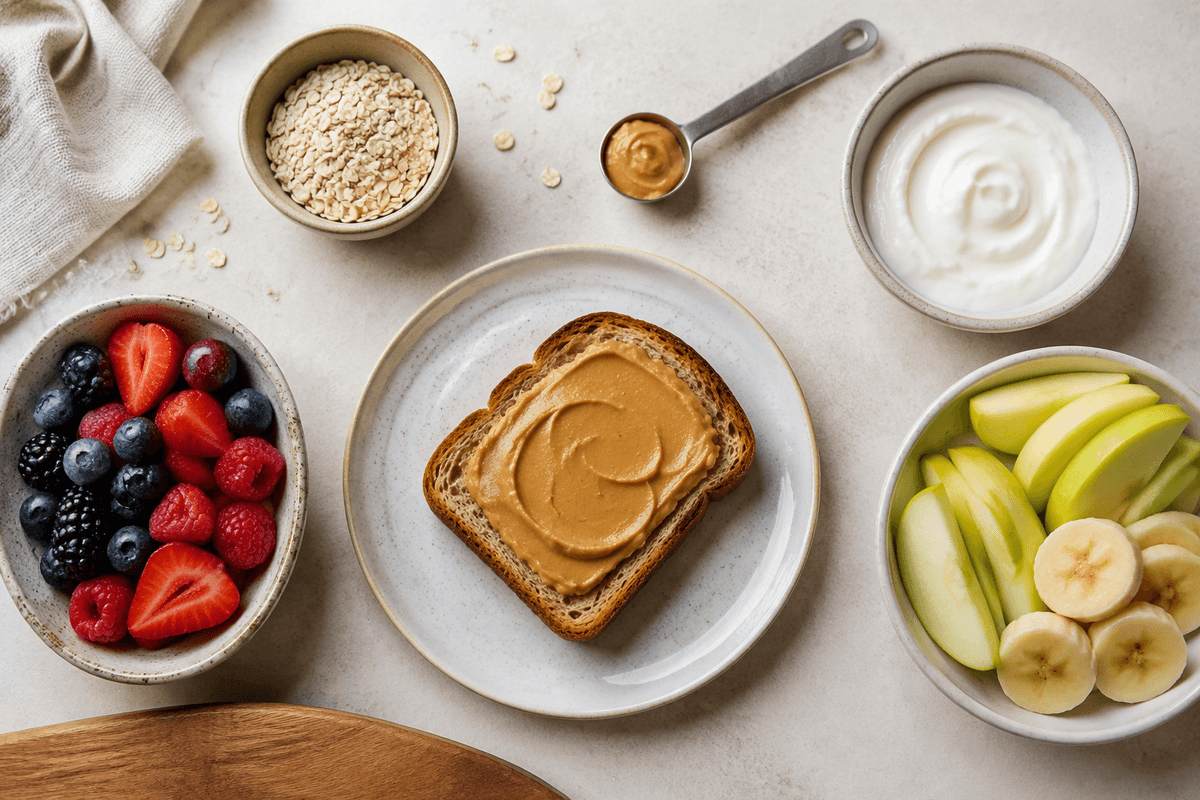
The first few bites may seem to settle hunger quickly, but the more useful effect often develops as the snack moves through the next couple of hours. Protein can add staying power, while fat tends to slow the meal’s movement and make it feel more substantial. Peanut butter also contains some fiber, although not enough to turn a small serving into a high-volume food. Together, these features may help hunger return more gradually than it would after a snack made mainly of refined carbohydrates.
The combination works differently depending on what is missing from the rest of the meal. Peanut butter on toast may feel satisfying because the spread adds richness and the bread supplies carbohydrate, but the meal can still be modest in volume. Adding fruit, oats, or yogurt may change the experience by making the meal larger and more varied, not simply by adding more protein or fat. Even then, the effect is not perfectly consistent: eating quickly, using a very small portion, or starting with intense hunger can make fullness fade sooner than expected. What matters is whether the combination keeps later hunger manageable without quietly turning one snack into several.
When A Reasonable Snack Backfires
The second piece of toast may seem harmless, especially after a busy morning when the first snack barely registered. But this is where a reasonable choice can quietly become a larger eating occasion. Peanut butter is dense, so adding more spread, another slice of bread, or a handful of extras can raise the meal’s energy content faster than its fullness increases. The stomach may feel satisfied, yet hunger may return on a familiar schedule because the meal still lacked enough volume or was eaten too quickly.
The opposite can happen when peanut butter is used to rescue a very small snack. A spoonful may calm hunger for a while, but if lunch is still several hours away, it may not carry the entire gap. Someone may then add fruit, crackers, or another spread later without realizing the original snack did not fail so much as fall short of the situation. Watching what happens over the next two or three hours is more revealing than judging the snack by its richness alone. A satisfying start can still lead to extra eating when portion, timing, and meal size do not match the day’s demands.
Peanut Butter Compared With Other Filling Foods
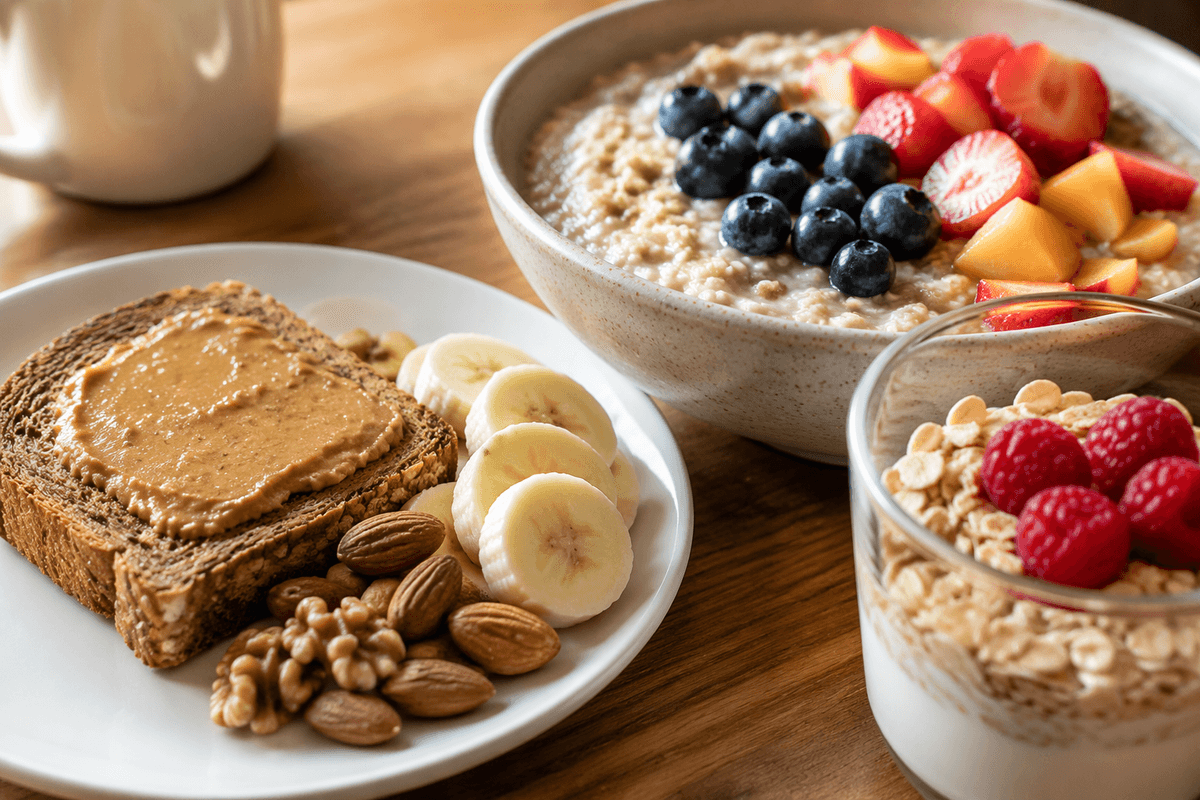
A bowl of oatmeal, a yogurt cup, or an apple with cheese may hold hunger differently from peanut butter on toast. Oatmeal and fruit usually provide more water and physical volume, so the stomach may feel fuller even when the meal is less rich. Yogurt can offer more protein per serving, while cheese may feel substantial with fewer bites. Peanut butter has a different advantage: its dense texture and combination of fat and protein can make a small serving feel satisfying, though it may not provide the same bulk.
That contrast matters when comparing snacks by immediate fullness alone. Peanut butter may work well when a compact option is convenient, but a larger-volume food may be easier to rely on when several hours remain before the next meal. The pairing also changes the comparison. Peanut butter with fruit or whole-grain toast may be more sustaining than peanut butter alone, while yogurt with oats or nuts may create a similar balance. No single food consistently wins; the useful test is which option delays distracting hunger without leading to extra grazing later.
Why Fullness Varies From Person To Person
One person may feel comfortably full after peanut butter on toast, while another is reaching for something else before the next meal. The difference may have less to do with the spread itself than with the starting point: sleep, activity, stress, appetite, and how long it has been since eating can all change how strongly a snack is felt. A portion that seems adequate on a quiet morning may feel insufficient after exercise or a rushed breakfast.
The rest of the meal matters just as much. Peanut butter paired with fruit, oats, or yogurt may hold hunger differently from a thin layer eaten alone, even when the peanut butter portion is unchanged. Eating speed and distraction can also make fullness harder to notice in real time. Instead of asking whether peanut butter is filling in general, it may be more useful to observe the pattern in one routine: how much was used, what accompanied it, when hunger returned, and whether later snacking followed.
A More Useful Way To Judge Satiety
The useful answer may not appear in the first few minutes after eating. Instead, notice what happens across the morning: how much peanut butter was used, what it was paired with, when comfortable hunger returned, and whether the next meal felt manageable or urgent. A serving that feels satisfying at breakfast may be less effective as a small afternoon snack, especially when several hours remain before dinner.
This kind of observation is more reliable than labeling peanut butter simply “filling” or “not filling.” If it helps reduce distracting hunger without prompting repeated bites later, the portion and pairing may suit the routine. If fullness fades quickly, adding more peanut butter is not always the best adjustment; the meal may need more volume, a slower pace, or a different balance of foods. Over time, the pattern matters more than any single snack.