Why Hydration Is More Than Drinking Water
After a hot workout, it can seem logical to keep drinking until thirst settles. Yet the body is adjusting more than its water supply. Sweat carries water along with sodium and smaller amounts of other electrolytes, so replacing only the fluid does not always recreate the balance that was lost. The result may feel subtle: thirst returning sooner, energy dipping, or muscles seeming less responsive than expected.
That does not mean every sweaty day calls for an electrolyte drink. The effect depends on how much was lost, how long the activity lasted, the heat, clothing, pace, and what was eaten before and afterward. Someone finishing a short session may replace losses comfortably with ordinary meals and fluids, while a person working for hours in the heat may notice a different pattern. Hydration is therefore less about chasing a fixed amount of water and more about considering fluid, electrolytes, and the conditions that shaped the loss.
The Main Electrolytes Behind Fluid Balance
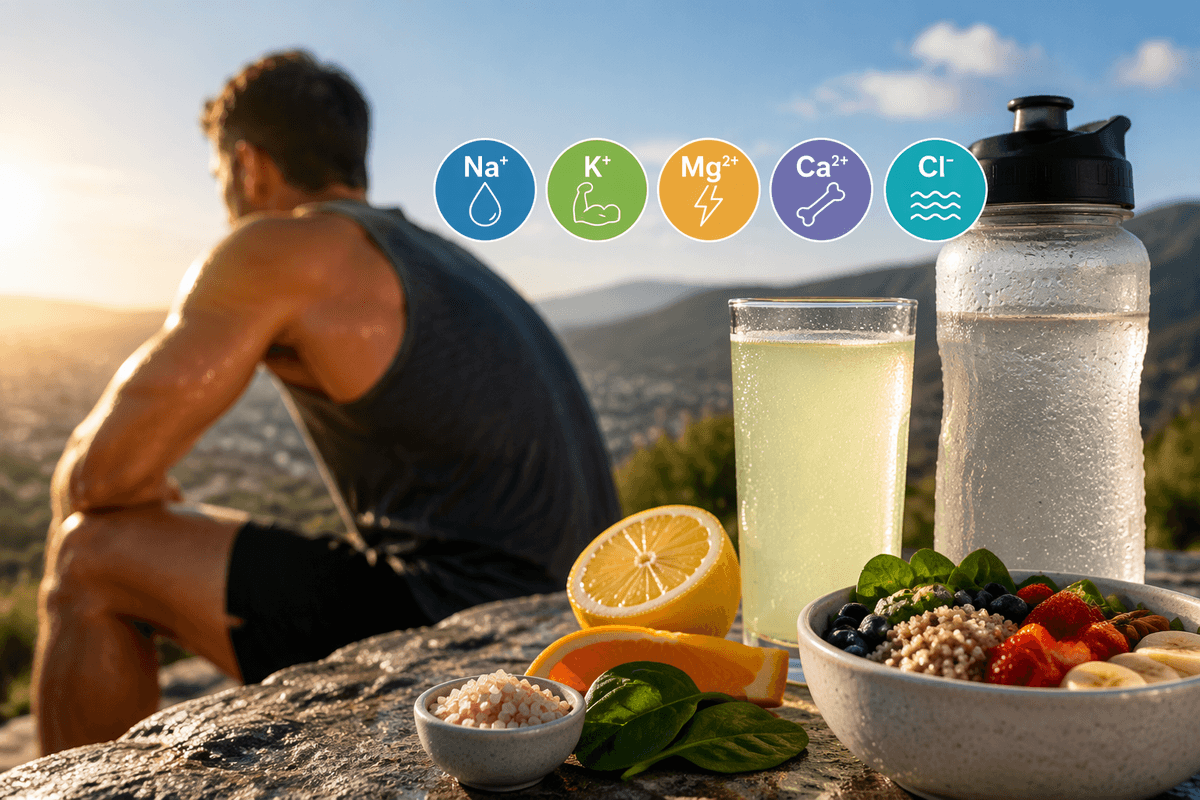
Salt on the skin after a long run is one visible clue that sweat contains more than water. Sodium is the main electrolyte involved in this loss, helping keep fluid distributed between the bloodstream and surrounding tissues. When sodium and water shift together, thirst, energy, and physical comfort can change in ways that are easy to blame on fatigue alone. The amount lost varies widely, though, so a salty shirt does not reveal exactly how much anyone needs to replace.
Potassium, chloride, magnesium, and calcium also contribute to fluid balance and normal muscle and nerve activity, but they are not lost in identical amounts or used in identical ways. Food often supplies much of these minerals, especially when meals include dairy, beans, fruits, vegetables, or salted foods. That is why an electrolyte product may be unnecessary after a brief workout but seem useful during prolonged heat or repeated sweating. The practical difficulty is separating genuine replacement needs from the common assumption that more minerals will automatically improve how someone feels.
How Muscles Depend On Electrical Signals
Near the end of a demanding workout, a muscle may feel heavy before it actually feels sore. Part of that change involves the signals that tell muscle fibers when to contract and relax. Nerves use electrical changes across cell membranes, and electrolytes such as sodium, potassium, calcium, and magnesium help create and control those changes. When sweating, heat, or inadequate replacement alters the surrounding fluid balance, the signals may not feel as smooth or reliable.
This can show up as reduced power, an unsettled muscle, or an occasional twitch, although those sensations are not specific to electrolyte loss. Fatigue, limited food intake, pacing, sleep, and simply asking a muscle to work longer than usual can produce similar effects. Water still matters because cells need enough fluid for these processes, but adding more water does not automatically correct every change after heavy sweating. The useful observation is the pattern: whether symptoms appear during prolonged heat or exertion, improve with rest and normal meals, or continue despite adequate recovery.
When Plain Water Does Not Feel Sufficient
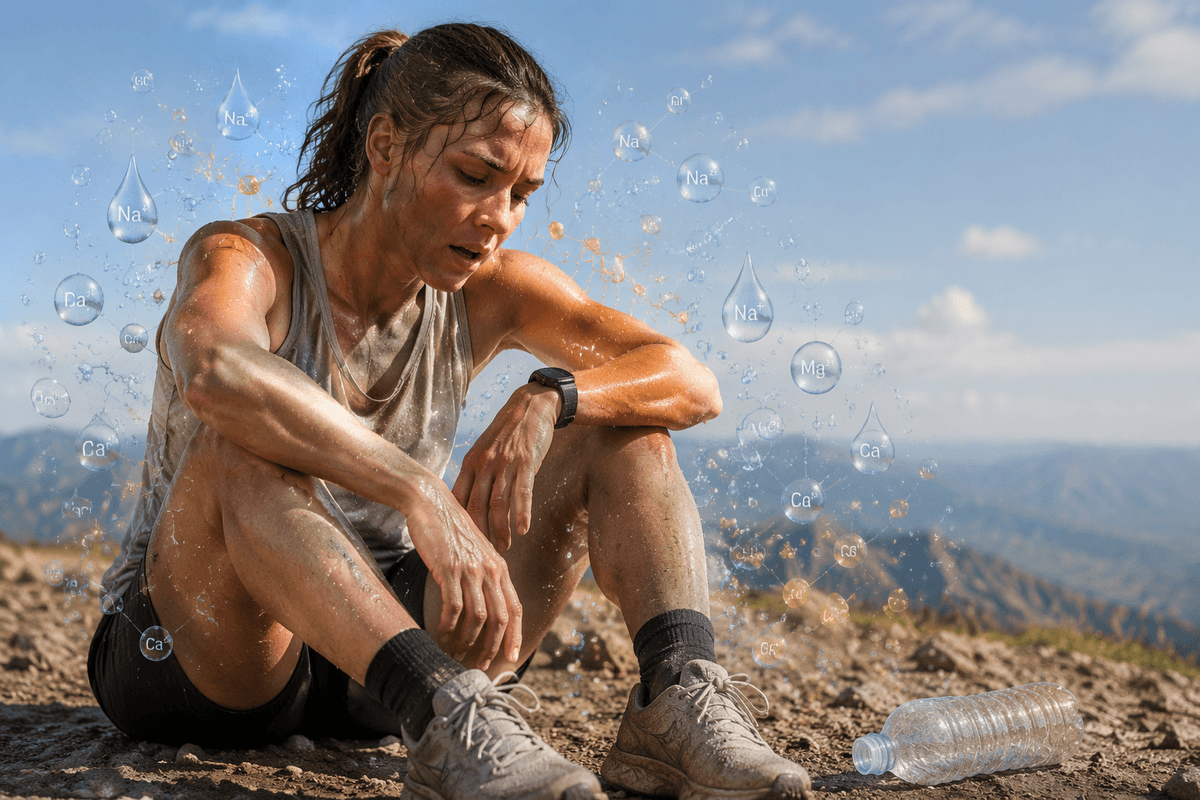
By the time a water bottle is empty, the body may still feel oddly unsatisfied. Thirst can return quickly, energy may remain flat, or the next set can feel harder than expected. After prolonged sweating, this may reflect more than a simple shortage of fluid. Water replaces volume, but sodium helps retain and distribute that water, so replacing a large loss with plain water alone may not produce the same sense of recovery.
Still, the sensation is easy to overread. A short workout, mild weather, or an ordinary meal may provide enough sodium and other minerals without any specialized drink. In contrast, several hours of work in heat, heavy clothing, or repeated sessions can create greater losses, especially when drinking is inconsistent. Even then, thirst and fatigue may also reflect insufficient food, poor sleep, or excessive effort. Plain water is not failing; it may simply be addressing one part of a changing balance. The useful question is whether the discomfort follows substantial sweating and improves as fluids, meals, and rest come back into place.
Why Symptoms Rarely Point To One Mineral
A cramp or sudden drop in energy can make it tempting to name one missing mineral, especially after a sweaty workout. Sodium may be involved, but the same sensation can appear when fluid intake is uneven, food has been limited, muscles are fatigued, or the effort simply exceeded what the body was prepared to sustain. Heat can add another layer by increasing sweat loss and making ordinary exertion feel more demanding.
The electrolytes work together rather than acting like separate switches. Sodium and chloride help support fluid distribution, while potassium, calcium, and magnesium contribute to nerve and muscle activity. Their roles overlap, and the amounts lost through sweat differ from person to person. A product focused on one mineral may therefore miss the broader situation, while taking more is not automatically better. Patterns are more informative than isolated symptoms: consider the duration of sweating, the heat, recent meals, drinking habits, and whether the sensation eases with rest and normal recovery.
Food, Drinks, And The Question Of Amount
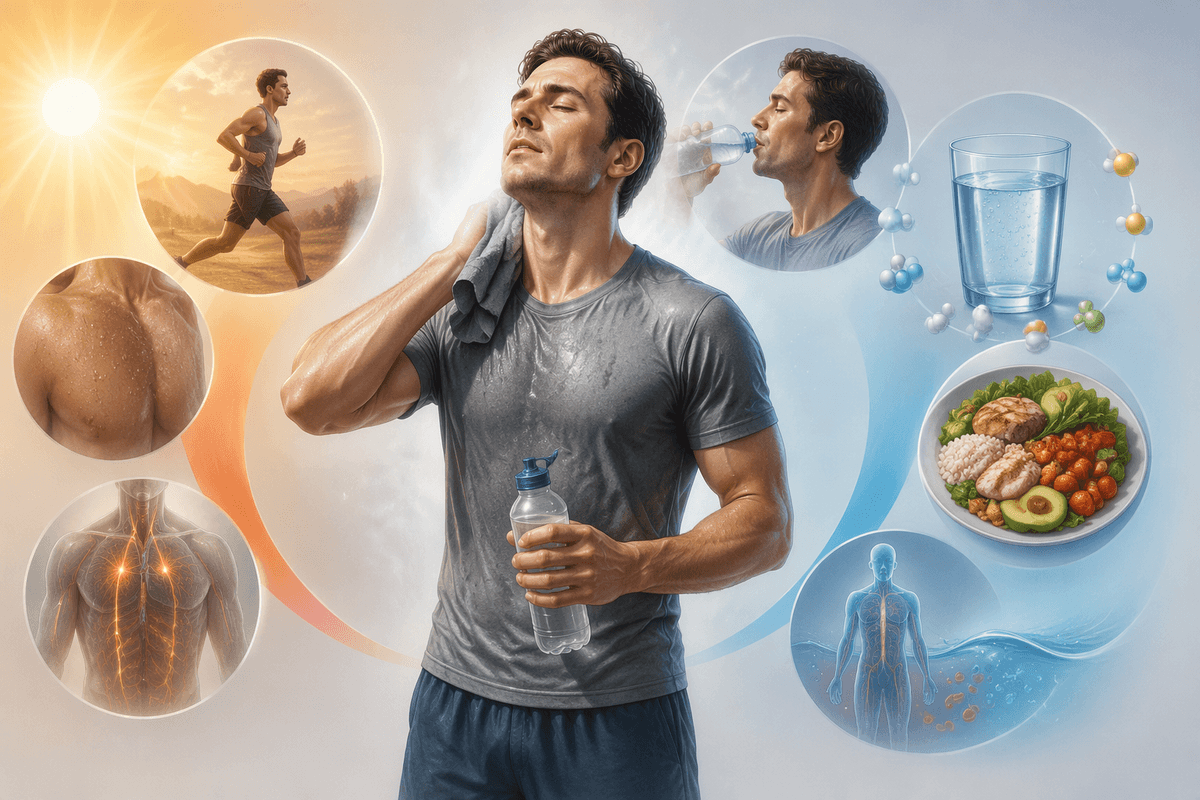
A sports drink can look like the obvious next step when a shirt is soaked and thirst keeps returning, but the amount matters as much as the label. A short workout may leave enough time for ordinary meals and fluids to replace what was lost. A long shift in heat, repeated training, or heavy sweating creates a different situation, especially if eating and drinking have been irregular. In those moments, a drink containing sodium may fit the circumstances better than water alone, though it is not automatically needed every time.
Food can quietly provide much of the replacement people are seeking. A meal with salted foods, carbohydrates, fruit, dairy, or vegetables may support recovery without requiring a concentrated electrolyte product. Drinks also vary widely in sodium, sugar, and total volume, so finishing one does not guarantee that the underlying balance has been addressed. The sweat losses are difficult to estimate, and thirst is influenced by heat, effort, habit, and appetite. Amounts make more sense when considered alongside the duration of sweating and what has already been eaten.
Recognizing Patterns Without Overinterpreting Them
After several similar workouts, a pattern may become easier to notice: thirst returns quickly on hot days, energy falls during long shifts, or muscles feel less coordinated when meals and drinking have been inconsistent. That pattern is useful, but it is not proof that one electrolyte is missing. Sweat rate, heat, clothing, pace, sleep, food, and recovery can all change the same experience.
Looking across conditions is more informative than reacting to one uncomfortable moment. Compare shorter and longer sessions, ordinary weather and heat, steady drinking and delayed drinking, or exercise with and without a normal meal afterward. If symptoms repeatedly appear with substantial sweating and improve as fluids, food, and rest return, electrolyte replacement may be one factor worth considering. If they persist, become severe, or occur outside those situations, the explanation may lie elsewhere. Hydration signals offer clues, not precise measurements, and the body’s pattern is usually more useful than a single symptom.