Arriving hungry: why New Mexico tastes different
We landed in Albuquerque thinking we’d “grab something quick,” and immediately hit the first snag: the food here isn’t just Mexican-adjacent—it’s its own thing, built around chile that’s roasted, simmered, and folded into everything. If you wait until you’re starving, you’ll order fast, default to a combo plate, and miss what makes New Mexico taste like New Mexico.
The win is that the signature flavors are consistent across budgets: slow-cooked beans, blue corn, and that earthy, smoky chile that can be mild—or quietly relentless. The “hot” isn’t standardized, and the same dish can swing depending on who’s cooking and what batch of chile they’re using. Plan your first meal as a test run, not your big splurge.
Green vs red chile: how to order confidently
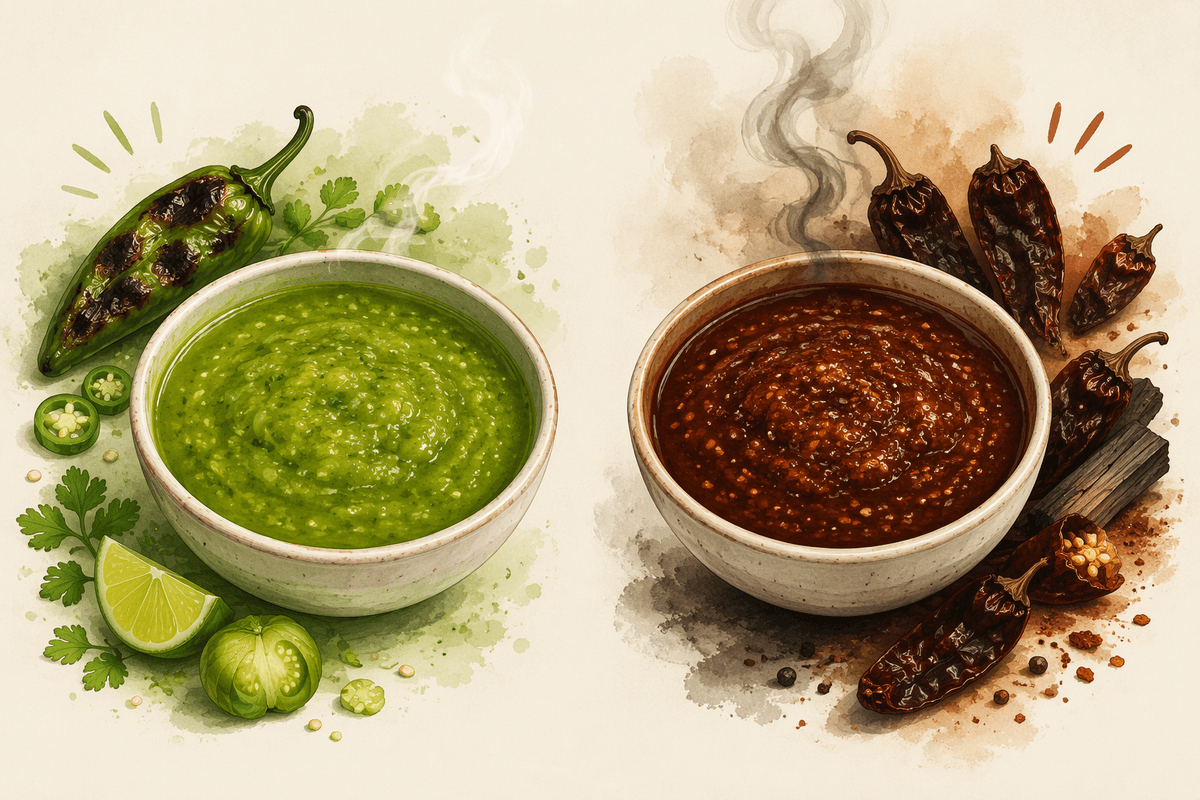
The first real decision hits before you’ve even picked a dish: “Red or green?” If you freeze, the safest move is to ask two quick questions: “Which is milder today?” and “Is your green more fresh or more smoky?” In a lot of spots, green reads brighter and sharper (especially if it’s closer to roasted), while red leans deeper and earthier from dried pods—more of a slow-burn sauce than a pop of heat.
What works well on a limited budget is using one plate as a controlled comparison: order your enchiladas or a burrito “Christmas” (both red and green) and take one bite of each before you commit for the rest of the trip. What doesn’t work is assuming “green” equals mild or that “red” automatically means hottest—either one can sneak up on you, and the kitchen’s definition of “medium” may not match yours. If you’re heat-cautious, say “mild if you have it” and ask for chile on the side; you’ll spend the same, waste less food, and still get the real flavor.
Iconic plates: enchiladas, rellenos, stacked meals
The first time I saw “stacked enchiladas” on a menu, I hesitated—because my brain wanted the rolled, sauce-drenched version. In New Mexico, stacked is often the point: flat tortillas layered with chile, cheese, and sometimes an egg on top. It eats like a fork-and-knife casserole, which is great when you’re sharing and comparing red vs green, but less great if you were counting on a tidy handheld meal. If you’re pacing spice, stacked also gives you a natural stop button; you can quit after a layer without feeling like you “ruined” a rolled enchilada mid-bite.
Chile rellenos are the other signature plate that rewards a little strategy. When it’s done well, the pepper is tender, the filling isn’t rubbery, and the batter stays light—even under sauce. When it’s not, it turns into a heavy, soggy situation that’s hard to finish (and a rough pick if you’ve got plans in Santa Fe after lunch). If you’re cautious, ask whether they’re using mild green chiles and whether the sauce is hotter than the pepper—heat often comes from the ladle, not the relleno.
Budget-wise, the “combo plate” can be a trap, but one combo is useful: enchilada plus relleno, ordered Christmas, with beans and rice. You’ll sample the state’s greatest hits in a single sitting, then spend the rest of the trip ordering with confidence instead of gambling meals on mystery specials.
Breakfast and snacks: burritos, sopaipillas, biscochitos
Morning is where New Mexico gets sneaky—in a good way—because breakfast burritos here aren’t a generic “grab-and-go” afterthought. The first friction point is timing: the best ones disappear early, and by late morning you’ll find the same fillings sitting heavier (or worse, lukewarm) under a heat lamp. If you’re chile-cautious, start with a smaller burrito and ask for chile on the side; it’s the cheapest way to test heat before you commit to a full smothered version that can derail your day in Taos.
Sopaipillas sound like dessert, but they’re really a decision about pace. Warm and puffy works well as a mid-afternoon reset—especially if you’ve overdone it at lunch—because you can nibble and share without ordering another whole plate. By the time you’re driving out of Albuquerque traffic, they’re deflated, so eat them on-site. If honey is on the table, use it sparingly at first; it turns “snack” into “nap.”
Biscochitos are the most reliable road snack of the bunch: they travel, they don’t melt, and they’re cinnamon-forward without being cloying. Some versions skew dry, so I treat them like a coffee companion, not a standalone dessert. If you’re budgeting meals, they’re the low-risk add-on that still feels distinctly New Mexican.
Regional specialties: Santa Fe, Albuquerque, Hatch, pueblos
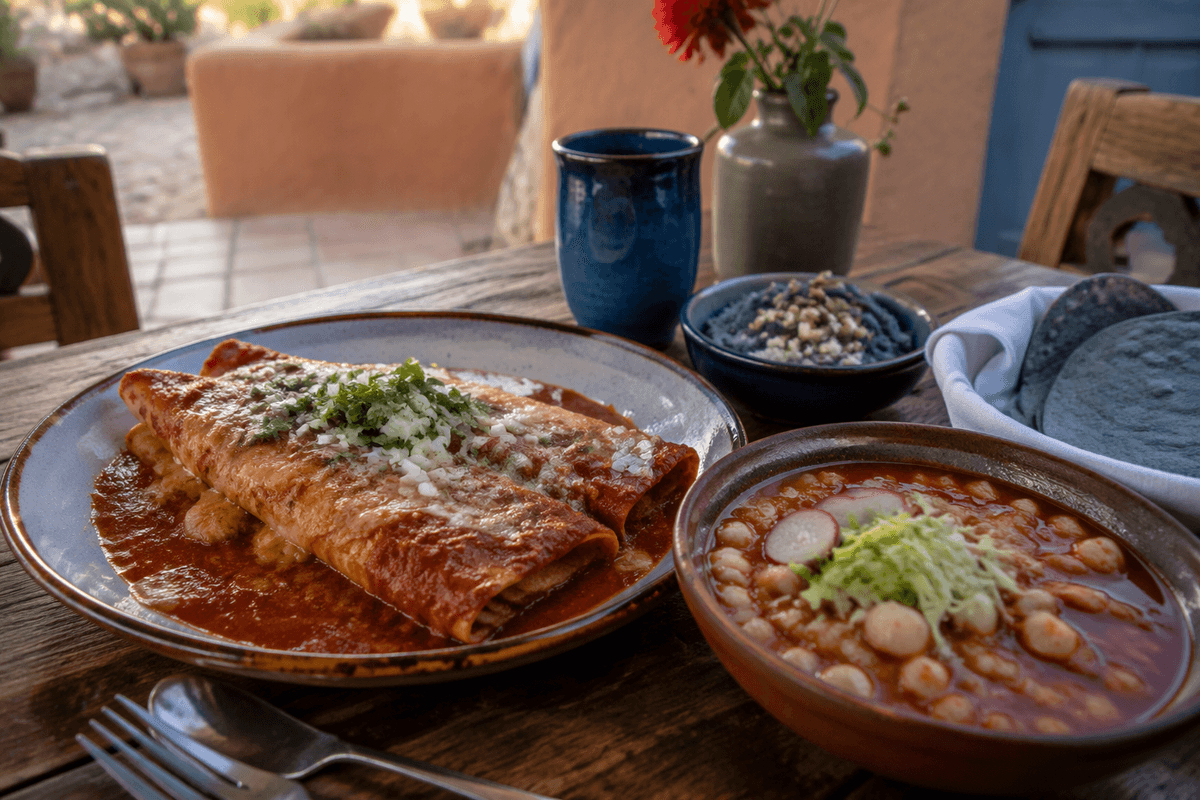
By day two, the planning question stopped being “what sounds good?” and turned into “where should we spend a limited meal.” Santa Fe rewards slower, saucier plates—think stacked enchiladas, posole, and anything with blue corn—because you’re usually sitting down anyway and the food leans a touch more composed. It’s easier to blow your budget on one “nice” lunch and then find yourself eating convenience-store snacks on the drive to Taos. If you want one Santa Fe splurge, make it a plate that uses chile as an ingredient, not just a topping, and ask for heat guidance before it hits the table.
Albuquerque is where you can test-drive local staples without committing to a long sit-down. Breakfast burritos and no-frills combo plates tend to be more affordable, but the friction is consistency—one place’s “medium” is another place’s “why are my ears ringing.” This is the city where ordering chile on the side actually works: you can dial in your tolerance, then decide if you’re ready for a fully smothered burrito or a Christmas-style plate later.
Hatch is the name everyone says out loud, but it’s more of a timing-and-route treat than a guaranteed stop on an Albuquerque–Santa Fe–Taos loop. If you do detour (or you spot roasting drums at a market), the smart move is to buy frozen roasted chile or a jar you’ll actually use—fresh pods are romantic until they ride warm in the car all afternoon. In pueblos and pueblo-adjacent spots, the constraint is availability: hours can be limited and offerings may be simple, so don’t show up starving with a rigid checklist. Go in ready to try what they’re serving, keep your heat requests polite and specific, and you’ll end up with a meal that feels like the place, not a souvenir version of it.
Leave prepared: spice levels, etiquette, take-home flavors
The last night, I always get ambitious—one more “real” plate, one more chance to prove I can hang with the heat—and that’s usually when New Mexico reminds you it plays a long game. If you’re even slightly unsure, treat spice like a dial, not a dare: ask for “mild, chile on the side,” and remember the burn often shows up after you’ve already cleaned the plate. What works well is stacking your risk earlier in the day (a breakfast burrito test, a Christmas plate at lunch) so you’re not gambling with a long drive to Taos afterward.
Etiquette here is mostly about being specific without being precious. “Which is milder today?” is a normal question; “no heat” can read like you don’t want chile at all, so I’d rather say “I want the flavor, just keep it gentle.” For take-home, skip anything that needs to stay crisp and grab flavors that survive road-tripping: frozen roasted green chile, a jar of red, and a bag of biscochitos for the passenger seat. The practical takeaway: leave with a version of chile you can actually use back home, not a souvenir you’ll feel guilty about later.