Why Vegetable Sodium Comparisons Are Surprisingly Difficult
The number on a vegetable label can look straightforward until the package is opened. A canned green bean may list sodium from the vegetable itself, added salt, and the liquid surrounding it, while a fresh version is usually measured before any seasoning or cooking water is involved. Frozen vegetables add another variable: some are plain, while others include sauces or seasoning that change the comparison.
Even then, the label may not match what ends up on the plate. Draining removes some of the packing liquid, rinsing may remove more, and a larger serving can quietly narrow the apparent advantage of one option. Preparation matters too, since butter, broth, sauces, or salty main dishes can contribute more sodium than the vegetable. The comparison is therefore less about whether canned, fresh, or frozen is automatically “best” and more about identifying what was added, how much is eaten, and how the vegetable fits into the meal.
Canned Vegetables Often Show The Widest Range
The first glance at a canned vegetable label can be misleading. Two cans of corn, peas, or green beans may look nearly identical on the shelf yet list noticeably different sodium amounts. The main reason is often the packing liquid: one product may contain added salt, while another is labeled no-salt-added or reduced-sodium. The vegetable itself has not necessarily changed much, but the liquid surrounding it can raise the listed amount.
Draining also makes the comparison less precise. If some of the liquid remains in the can, part of that sodium may still reach the serving. If the vegetables are rinsed, the amount eaten may be lower, although the reduction is inconsistent and depends on the vegetable, water flow, and rinsing time. Products labeled reduced sodium can still contribute more than expected when portions are generous or several canned ingredients are combined. Canned vegetables are therefore not one fixed category; their sodium range reflects the recipe, the liquid, and what happens before they reach the plate.
Fresh Vegetables Usually Start With Less Sodium
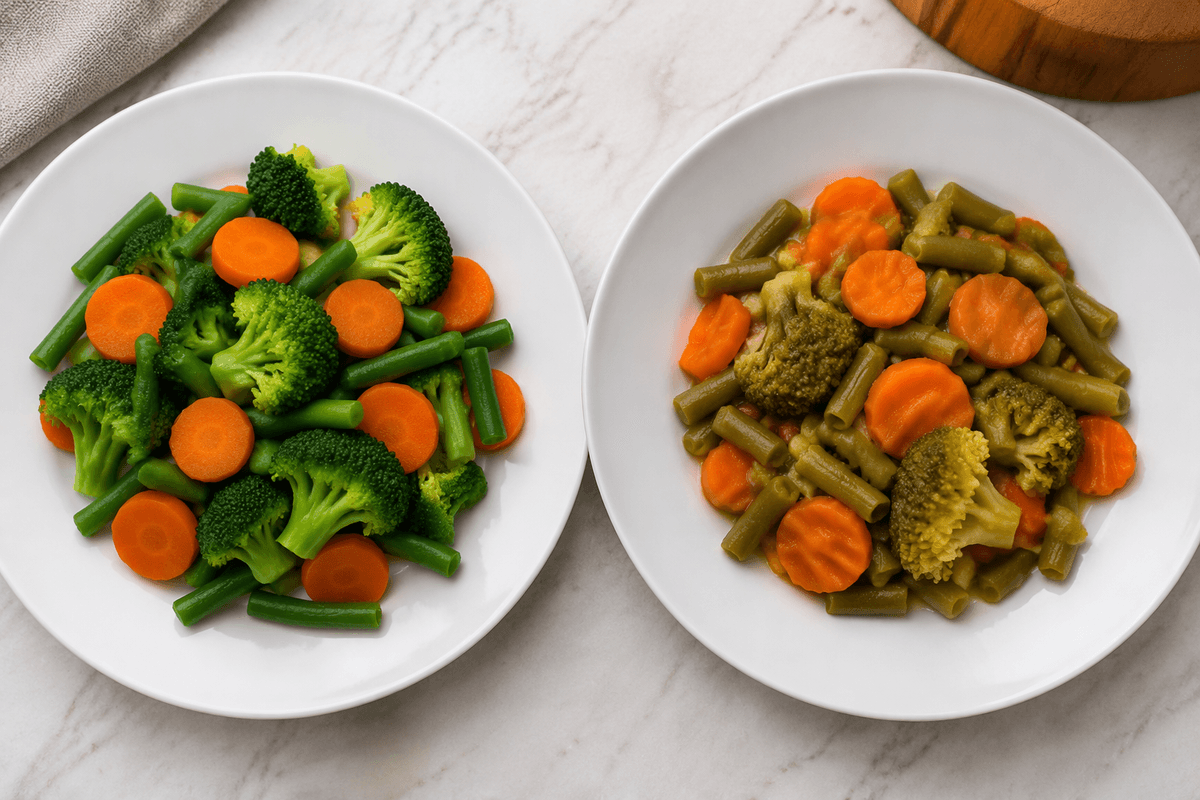
A fresh vegetable can seem like the obvious lower-sodium choice when it is sitting unseasoned on a cutting board. In many cases, it does start with less sodium because there is no salty packing liquid and usually no added salt at the point of purchase. That makes the label easier to interpret, especially for plain vegetables such as fresh broccoli, carrots, or green beans.
The advantage can narrow during preparation, however. Boiling vegetables in salted water, adding broth, seasoning blends, or finishing them with a sauce changes what reaches the plate. Fresh produce also takes more effort: washing, trimming, and cooking may be inconvenient on busy days, which can lead to less predictable portions or a quick, saltier substitute. It may therefore offer a cleaner starting point rather than a guaranteed low-sodium meal. The useful comparison is between the fresh vegetable as prepared and the canned version after draining, rinsing, and serving—not between an untouched ingredient and a finished dish.
Frozen Options Depend On What Comes With Them
The bag may feel like the simplest option until the ingredient list comes into view. Plain frozen vegetables are often just washed and frozen, so their sodium can remain relatively low and fairly easy to compare with fresh produce. The uncertainty begins when the package includes a sauce, seasoning, cheese, butter, or another prepared coating. In that case, the sodium belongs partly to what comes with the vegetable, not to the vegetable itself.
Even plain frozen vegetables can be prepared in ways that change the practical result. Steaming them without added salt keeps the comparison close to the label, while microwaving a seasoned side dish or mixing the vegetables with broth can raise the amount quickly. Package size may also encourage larger servings because frozen vegetables are convenient to scoop. Checking whether the label describes plain vegetables or a complete side dish is therefore essential. Frozen food is not automatically lower or higher in sodium; the deciding detail is often what has already been added before cooking.
Serving Sizes Can Distort The Apparent Difference
A label can make one vegetable look clearly lower in sodium until the serving measure is examined. A canned product may list sodium for half a cup, while a person serves closer to a full cup from the opened can. A frozen side dish may use a smaller portion on the label, even though the package encourages a more generous scoop. Comparing the numbers without matching portions can exaggerate or hide the actual difference.
This is especially easy to miss when vegetables are mixed into soups, casseroles, rice, or pasta. The amount eaten may be larger than the listed serving, and several portions can come from a single meal. Weighing or measuring every serving is not realistic for most routines, so a practical comparison starts with using the same portion for each form. It also helps to notice whether the label describes drained vegetables, vegetables with liquid, or a prepared dish. The listed sodium is useful, but it only becomes meaningful when the serving resembles what is actually placed on the plate.
Rinsing Canned Vegetables Helps, But Not Completely
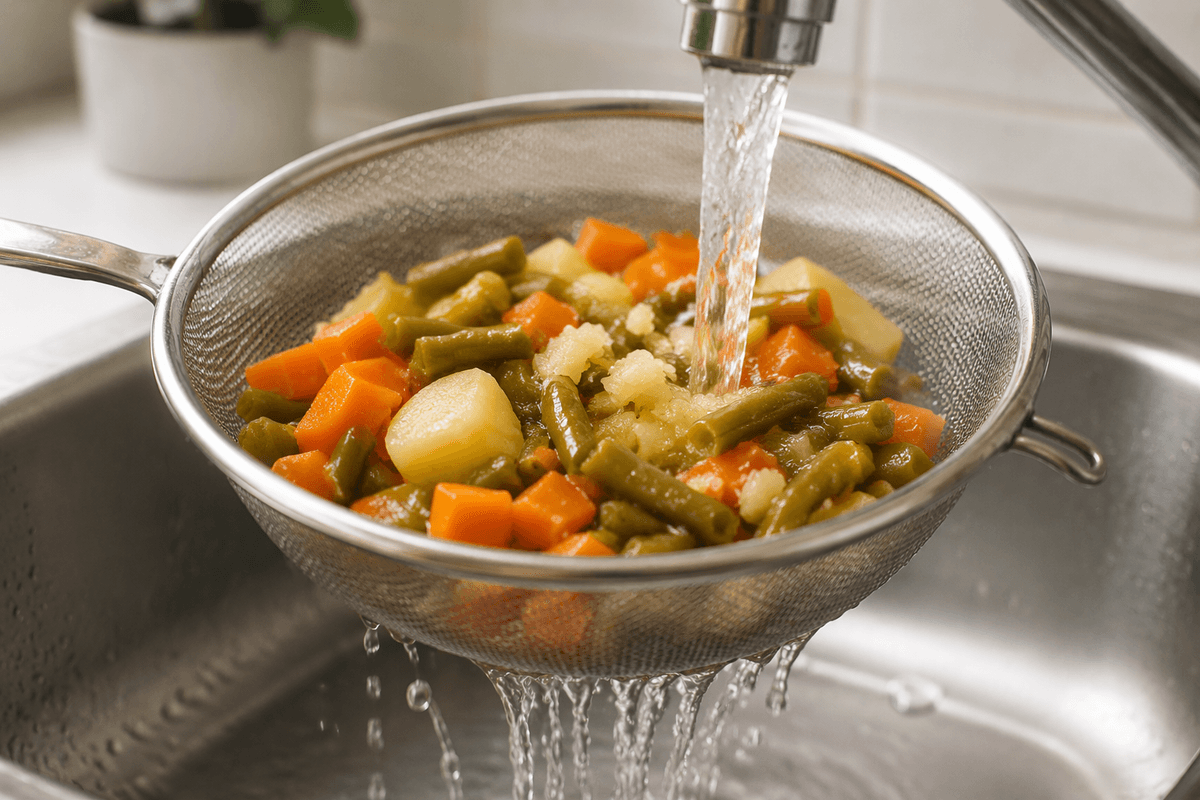
The water running through the colander can make a canned vegetable seem much closer to its fresh counterpart, but the change is not always as large as expected. Draining first removes some of the packing liquid, and rinsing can wash away additional surface salt. The practical reduction depends on how long the vegetables are rinsed, how thoroughly the liquid is removed, and how much sodium was absorbed during processing. A quick rinse is useful, but it does not turn a salted product into an equivalent no-salt-added option.
Softer vegetables may break apart under running water, and rinsing can dilute flavor enough that extra seasoning gets added later. The final amount therefore depends on what follows: a lightly seasoned serving may remain relatively modest, while broth, salty sauces, or a larger portion can erase much of the benefit. Rinsing is best viewed as one adjustment that lowers some sodium, not as a complete correction for the label.
The Practical Comparison Depends On The Whole Meal
The vegetable may look like the main decision until the rest of the plate is assembled. A rinsed serving of canned peas can contribute less sodium than its label first suggests, yet a meal built around deli meat, boxed rice, canned soup, or a salty sauce may still end up high overall. By contrast, plain frozen vegetables with no added seasoning may fit easily beside a more strongly flavored main dish. The practical difference depends on how much sodium the vegetable adds in relation to everything else being eaten.
This makes strict rankings less useful than checking the whole meal. Compare similar portions, note whether liquid or sauce is included, and consider what preparation adds after opening the package. Convenience remains a legitimate factor: a slightly higher-sodium vegetable that is actually used may be more practical than a lower-sodium option that requires extra work and gets replaced by a prepared side. The label still matters, but its meaning becomes clearer when viewed as one part of the finished meal rather than as an isolated verdict.