That smaller paycheck after a holiday shift
The surprise usually shows up a few days later, not on the holiday itself. A longer shift, a missed meal at home, extra travel, and then a paycheck that looks ordinary or even lighter than expected. That does not automatically mean payroll made a mistake. In real pay reviews, the first miss is often expectation: many workers assume any public holiday triggers a higher rate, a day in lieu, or both. Sometimes it does. Sometimes the day was not treated as a qualifying holiday, the shift crossed pay periods, or the premium applied only to certain hours. Before reacting to the total, it helps to separate assumption from rule.
Did your workplace treat it as a holiday
The next check is less dramatic but usually more decisive: whether the employer actually designated that date as a recognized holiday in payroll. A calendar may call it a public holiday, yet the pay system may not treat every location, union group, contract type, or business unit the same way. Multi-state employers, hospitals, retailers, and logistics operations often run on separate holiday schedules. If the company observed the day on a different date, closed one site but not another, or swapped the benefit for floating time, the paycheck can look flat even when the shift felt like holiday work.
That is why the useful evidence is usually boring. Look at the pay stub code, the handbook holiday list, the posted payroll calendar, and any collective agreement or offer letter. If none of those sources marks the date as a paid holiday for that role, premium pay may never have been triggered. If they do mark it, then the review becomes narrower: which hours qualified, and what form of compensation was supposed to follow.
Working it and getting paid are separate
Even when the date qualifies, the next split matters more than most pay stubs make obvious: holiday entitlement and hours-worked compensation are often separate lines with separate rules. A worker can be owed public holiday pay for the day itself and still receive only the regular hourly rate for time spent on the floor, unless a premium applies in that jurisdiction, contract, or policy. The reverse can also happen. Some employers pay a premium for holiday hours but do not owe the flat holiday benefit because the employee missed the scheduled shift before or after, was still within a waiting period, or did not meet minimum-work requirements.
That is why the paycheck needs to be read by component, not by total. Look for distinct entries such as holiday pay, premium pay, substitute day, or lieu time. If all compensation was folded into regular earnings, the result can look lower than expected even when part of the obligation was met elsewhere in the pay period. Overnight shifts add another point of friction, because payroll may assign the hours by clock date rather than by when the holiday started for the operation. Once those pieces are separated, the remaining question gets more practical: which kind of worker payroll treated you as.
Your job status can change the answer fast

A small label in payroll can change the whole reading of that holiday shift. Hourly, salaried nonexempt, salaried exempt, part-time, casual, seasonal, temporary, and union-covered roles are often handled under different rules even inside the same building. That matters because holiday rights are not always attached to the day alone; they can depend on whether the worker tracks overtime hours, has a fixed salary that already covers certain closures, or sits in a class excluded from premium terms. A part-time employee may qualify for a prorated holiday benefit. A casual worker may need to meet a minimum schedule pattern first. A salaried exempt employee may see no separate premium line at all, which looks wrong until the contract language is checked.
This is usually where quick comparisons with a coworker stop being useful. Two people can work the same public holiday, on the same shift, and still receive different results because one is covered by a collective agreement, one is new enough to be in a waiting period, or one is classified in a role with substitute leave instead of extra cash. If the paycheck looks light, confirm the status payroll used before judging the rate. A wrong classification can distort every line after that.
Count the hours before judging the rate
After status is clear, the math usually gets less intuitive. A holiday premium may apply only to hours actually worked on the qualifying date, not to the whole shift, the whole day, or the whole paycheck. If a shift started the night before and ended on the holiday morning, payroll may split those hours. Unpaid meal breaks can reduce the premium portion too. That is why a line that looks like a weak rate is sometimes a smaller block of premium hours spread across regular earnings, holiday pay, and overtime rules that did not all attach to the same time.
It helps to rebuild the shift from the time record rather than from memory. Check the exact start and end times, any clock-out gaps, whether training or on-call time counted, and which pay period captured the hours. Overtime can complicate the picture further, because some employers stack holiday premiums on top of overtime while others credit one against the other if the law or contract allows it. Before deciding the rate was cut, count how many hours were eligible for each type of pay. The difference often starts there, not in the headline number.
Some lower payments are allowed exceptions
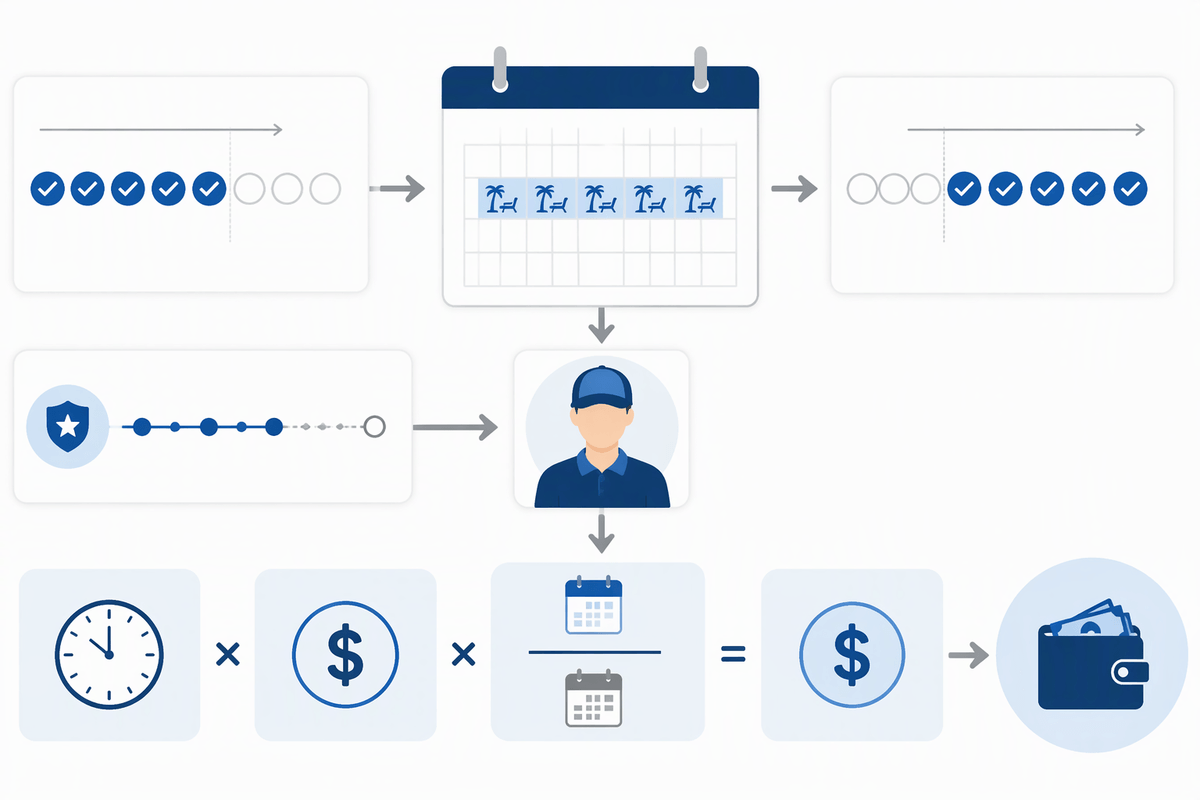
Even after the hours are rebuilt, a lower number can still be lawful. Holiday pay rules often include carve-outs that feel unfair but are still valid on the stub. Some plans let an employer provide a substitute day off instead of a cash premium. Some only require the average day’s pay for the holiday itself, not extra pay for working it. In other workplaces, a collective agreement trades higher holiday rates for different benefits somewhere else, such as more paid leave or a stronger overtime formula. The result is the same practical problem: the check looks short because the value was moved, delayed, or limited.
Absences around the holiday are another common fault line. Missing the last scheduled shift before the holiday or the first one after it can cancel eligibility in some systems. New hires, casual staff, and employees below a minimum service threshold may also fall into narrower rules. None of that proves payroll got it right. It just means the next review has to be more exact. Once an exception seems possible, the useful question changes from “Why wasn’t I paid more?” to “Which rule was payroll relying on?”
When a pay difference deserves a closer look
At that point, the remaining gaps are the ones worth testing, not guessing at. A closer review makes sense when the stub shows no holiday code at all, the hours on the time record do not match what payroll used, the employer handbook promises a premium that never appears, or a substitute day was never credited. A status error matters too. If payroll treated a nonexempt worker as exempt, or dropped part-time eligibility, the shortfall can spread across more than one line.
The practical move is to line up four things: the schedule, the clocked hours, the pay stub, and the policy or agreement in force on that date. If one of those conflicts with the others, the lower check stops looking like a harmless surprise and starts looking like something specific enough to question.