What Makes Avocado Nutritionally Different
A spoonful of avocado can make a simple meal feel noticeably different: smoother, richer, and often more satisfying than the same foods eaten alone. That comes from its unusual combination of mostly unsaturated fat, fiber, and several vitamins and minerals in one fruit. Unlike foods that mainly contribute one nutrient, avocado can add richness while also changing the meal’s texture and how quickly it feels finished. Still, its value depends on what surrounds it. Added to beans, vegetables, or whole-grain toast, it may complement an already varied meal; spread thickly over refined bread or paired with other calorie-dense foods, the balance changes. The difference is less about avocado being uniquely complete and more about how several useful qualities arrive together in a modest portion.
Healthy Fats Influence Fullness and Energy
The first sign may be subtle: a meal with avocado seems to hold your attention longer, so the usual urge to look for a snack arrives later or feels less urgent. Its mostly unsaturated fat adds richness and slows the meal’s overall pace, while fiber can contribute to a steadier sense of fullness. This does not mean avocado supplies a special kind of energy or works the same way for everyone. The effect depends on what else is on the plate and how much avocado is used.
For example, adding a few slices to vegetables, beans, or eggs may make a lighter meal feel more complete without changing its basic character. A large serving alongside cheese, oil, or a creamy dressing can create a much heavier meal, even if the ingredients are generally viewed as nutritious. Some people also notice that fat-rich foods feel satisfying but less immediately energizing than carbohydrate-rich foods. Avocado can support meal satisfaction, but it is one part of the balance rather than a guarantee of lasting energy.
Fiber Changes Digestion More Than Expected
A few hours after the meal, the difference may show up less as fullness and more as digestion. Avocado’s fiber adds bulk and can help food move through the digestive system at a steadier pace, especially when it replaces a lower-fiber spread or topping. That change may support regularity for some people, but it is not always immediate or comfortable. A sudden increase in fiber can bring bloating, gas, or a heavier feeling before the body adjusts.
Avocado added to beans, lentils, vegetables, or whole grains creates a much larger fiber combination than avocado eaten with refined crackers or white toast. That can be useful, but the total may feel excessive if portions increase quickly or fluid intake is low. In other situations, a small amount simply adds texture without producing an obvious digestive effect. Fiber is therefore part of avocado’s nutritional value, not a predictable result on its own. The practical difference often comes from how gradually it is introduced and what other fiber-rich foods are already present.
Vitamins And Minerals Work In Combination
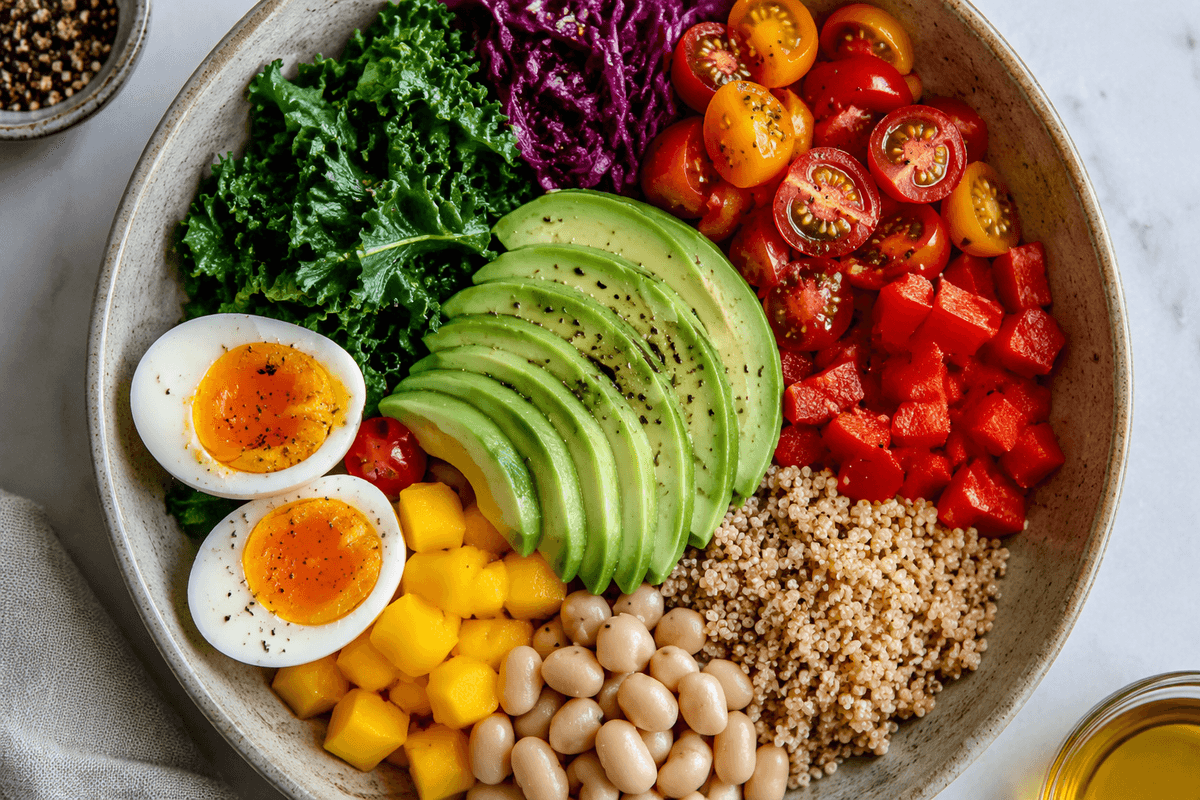
The color on the plate can be easy to overlook, but avocado’s vitamins and minerals add another layer to the meal. It provides nutrients such as folate, vitamin K, vitamin E, vitamin C, and potassium, although the amounts depend on the portion. These nutrients do not act as a single package with one noticeable effect. Instead, they contribute alongside nutrients from vegetables, beans, eggs, grains, or other foods eaten at the same time.
Avocado can also change how those foods are used in the meal. Its fat may help the body absorb some fat-soluble compounds from vegetables, including carotenoids found in foods such as tomatoes, peppers, and leafy greens. That does not make avocado necessary for absorbing them, but it may make a mixed meal nutritionally more useful than the same vegetables served without any fat. Adding avocado cannot compensate for a meal lacking variety, and its vitamins and minerals are not evenly concentrated enough to define overall diet quality. Its contribution becomes clearer when viewed as one supportive part of a broader plate.
Portion Size Creates A Nutrition Tradeoff
The tradeoff may become noticeable when a few slices turn into half an avocado without the rest of the meal changing. The larger portion provides more unsaturated fat, fiber, potassium, and other nutrients, but it also adds considerably more energy. That may be useful when avocado replaces butter, mayonnaise, or another spread, yet less helpful when it is added on top of cheese, oil, nuts, or a large serving of grains. The food itself has not changed; the balance of the meal has.
Preparation can make the difference harder to judge. Mashed avocado mixed with oil or served in a large bowl may feel lighter than it actually is, while a measured portion on beans or vegetables can make a smaller meal more satisfying. There is no single amount that fits every person or eating pattern. Appetite, activity, meal timing, and the foods being replaced all matter. Avocado may improve nutrient density in one setting and simply increase the meal’s total size in another, so its value is best judged by what it contributes and what it takes the place of.
Why Responses Vary Between Different People

The same avocado toast can feel light and satisfying to one person, yet overly rich or uncomfortable to another. Differences in appetite, usual fiber intake, activity, and meal timing all shape that response. Someone accustomed to beans, vegetables, and whole grains may notice little digestive change after adding avocado, while someone eating less fiber may feel fuller, bloated, or slower to digest. The amount used matters too, especially when avocado is added rather than substituted for another spread.
Preparation and the rest of the plate can further change the experience. Sliced avocado with eggs and vegetables may support a balanced meal, while a large serving combined with cheese, oil, or refined carbohydrates may feel heavy without providing the same variety. Individual responses are therefore useful observations, but they are not simple proof that avocado is helping or causing a problem. If the pattern continues, looking at portion size, meal combinations, and gradual changes may give a clearer picture than judging the food in isolation.
Separating Common Claims From Useful Context
The confusion often begins with a familiar claim: avocado is “healthy,” so more must be better. In practice, that label leaves out the details that shape the meal. Avocado may provide unsaturated fat, fiber, and useful vitamins, but it is not automatically lighter, more filling, or more nutritious than every alternative. Replacing butter or a highly processed spread may change the meal in one direction; adding avocado to an already rich plate may change it in another.
Another common misunderstanding is treating one noticeable effect as proof of a complete benefit. Feeling fuller does not necessarily mean the meal contains everything needed, just as having no digestive reaction does not mean the fiber had no value. The most useful context is usually found in the pattern: the portion, the preparation, the foods being replaced, and how the meal feels over time. Avocado can make an everyday meal more satisfying and nutrient-dense, but its role remains supportive rather than defining. A balanced eating pattern is still judged by the variety and balance of the whole plate.